Category: Fit Routine

  • What Is a Good Beginner Strength Training Workout?

    At a glance

    • The plan: Adults need muscle-strengthening activity on 2 or more days each week.
    • What’s new: Systematic reviews examine load, sets, frequency, and failure versus non-failure training.
    • This week: Work major muscle groups including legs, hips, back, abdomen, chest, shoulders, and arms.

    What is a good beginner strength training workout when you just want a clear place to start? It is a repeatable routine that covers the major muscle groups, fits into your week, and leaves room to learn each movement without making every session a test. For most beginners, the useful starting point is not a complicated split routine. It is a short, full-body practice you can return to on a regular schedule.

    For this plan, “resistance training,” “weight training,” and “strength training” all point to the same practical task: moving against some form of resistance to work the major muscle groups. The resistance can come from bodyweight, a resistance band, a backpack, or another household item you can hold steadily. The rule is repetition over perfection. Start with a version you can control, then change only one small thing at a time.

    What a beginner strength workout needs

    Beginner practicing a chair sit-to-stand in a bright home
    Photo by Pavel Danilyuk on Pexels

    The CDC adult activity guidance says adults need muscle-strengthening activity on 2 or more days a week, working all major muscle groups: legs, hips, back, abdomen, chest, shoulders, and arms. That gives this routine its structure.

    Plan 2 or more days in your week to do the same short sequence. On each planned day, choose one exercise from every line below. The first move named is the default, and the move after the dash is the substitute. If the default does not suit your space, your comfort, or the equipment you have, switch right away instead of skipping that movement.

    • Chair sit-to-stand — substitute: bodyweight squat.
    • Wall push-up — substitute: counter push-up.
    • Backpack hip hinge — substitute: glute bridge.
    • Supported backpack row — substitute: resistance-band row.
    • Standing overhead press with a household item — substitute: wall slide.
    • Dead bug — substitute: standing knee lift.

    How to run each session

    1. Pick one move from each line.
    2. Set up slowly and check your footing.
    3. Move at a controlled pace from start to finish.
    4. Swap to the substitute if a move feels wrong.
    5. Stop the set before your form gets rushed.
    6. Note which versions felt steady.

    If the setup feels awkward, make it easier: use the substitute, use less resistance, or shorten the range of motion. A good beginner workout is one you can repeat with attention.

    4-Week Plan

    Week Schedule Workout focus Simple progression
    Week 1 Do the routine on 2 or more days. Learn the default exercise and its substitute for every line. Choose the easiest version that feels controlled.
    Week 2 Repeat on 2 or more days. Use the same sequence and make your setup more consistent. Keep the version that lets you move steadily.
    Week 3 Repeat on 2 or more days. Keep the same major-muscle-group sequence. Choose a harder variation only where control stays steady.
    Week 4 Repeat on 2 or more days. Review which movements fit your routine and space. Keep the versions you can repeat, and use substitutes where needed.

    This plan builds gradually on purpose. Week 1 is about getting familiar with the moves, not proving anything. Week 2 is about keeping the appointment with yourself. Week 3 lets you make a movement harder, but only once the earlier version feels reliable. Week 4 is a review week: keep what works, swap what does not, and stay on the schedule rather than chasing a dramatic reset.

    Beginner strength routine progression, week by weekFlow diagram: Start: learn each movement and its substitute → Repeat: same sequence on 2 or more days → Build: try a harder variation where control holds → Review: keep what fits and swap what does not. Note: Work all major muscle groups: legs, hips, back, abdomen, chest, shoulders, and arms.Start: learn each movement and itssubstituteRepeat: same sequence on 2 or more daysBuild: try a harder variation wherecontrol holdsReview: keep what fits and swap whatdoes notWork all major muscle groups: legs, hips,back, abdomen, chest, shoulders, and arms.
    Diagram: Beginner strength routine progression, week by week. Drawn from the official sources linked in this article; it adds no new data.

    How to progress without chasing perfection
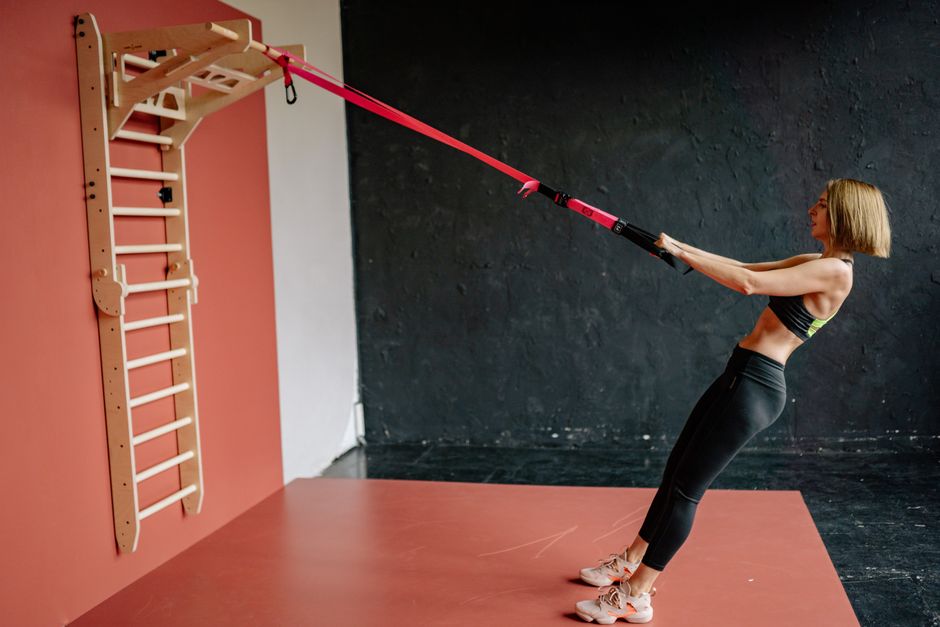
    Person doing a resistance band row during a home strength workout
    Photo by Yan Krukau on Pexels

    When people ask how to start resistance training for beginners, the big question is often whether every workout needs to feel hard. It does not. The practical goal here is consistency and deliberate movement. Use the same basic exercise menu long enough to see what feels stable and what needs a substitute.

    Progress can be small. You might move from a wall push-up to a counter push-up, pick a different household item for the press, or use the default move after starting with its substitute. Change one element, then repeat it on later training days. If the new version makes you rush or feel uncertain, go back to the earlier one. That is adjustment, not failure.

    Training to muscular failure is not part of this plan. A systematic review and meta-analysis looked specifically at resistance training taken to repetition failure versus non-failure, which is useful context if you’re wondering how hard a set needs to feel. Your job right now is simpler: practice the movement, keep the schedule, and stop treating a hard session as the only kind that counts.

    What the research can and cannot answer

    What the research supports What it does not show
    CDC guidance calls for muscle-strengthening activity on 2 or more days each week that works all major muscle groups. It does not prescribe one required exercise list, piece of equipment, or home setup.
    Systematic reviews examine how load, sets, and frequency relate to strength and hypertrophy in healthy adults. They do not provide personal medical clearance or replace an individual assessment of pain, injury, or movement limits.
    A systematic review and meta-analysis examines training to failure versus non-failure. That question does not require a beginner to make failure the goal of every workout.

    Research context for this routine

    The routine follows the broad direction of the Physical Activity Guidelines for Americans and the CDC’s major-muscle-group guidance. It does not try to turn a research paper into a rigid household workout.

    On training variables, Currier and colleagues’ systematic review and Bayesian network meta-analysis examined combinations of load, sets, and frequency in healthy adults. PMID: 37414459. It’s a useful reminder that a strength routine has several adjustable parts, so a beginner does not need to change all of them at once.

    Grgic and colleagues’ systematic review and meta-analysis examined resistance training to repetition failure versus non-failure. PMID: 33497853. The takeaway for this plan is practical: use a manageable variation, repeat it, and save harder changes for a later week.

    Schoenfeld and colleagues’ systematic review and meta-analysis compared low-load and high-load resistance-training protocols. In the included trials, all sets were taken to momentary muscular failure. I’d read it as background, not a home prescription. This plan keeps resistance flexible and does not ask you to train to failure.

    Who should check with a clinician first

    Check with a clinician before starting or changing this routine if you have a medical condition, a recent injury, symptoms during activity that worry you, or activity limits a clinician has already set. Stop if a movement causes pain or feels unsafe, and only use the listed substitute if it is comfortable.

    FAQ

    What is resistance training for beginners?

    For a beginner, resistance training is a planned set of movements done against some form of resistance. In this routine, that can mean bodyweight, a resistance band, a backpack, or a household item. What matters is that each session covers the major muscle groups named in CDC guidance and happens on 2 or more days of the week.

    What is weight training for beginners if I do not have weights?

    You can start without dumbbells or a barbell. Use the bodyweight options first, then add a band, backpack, or household item if it fits the movement. Every exercise has a substitute, so a missing piece of equipment does not end the session.

    How do I start weight training for beginners without overdoing it?

    Follow Week 1 as written: pick a controlled version of each movement and do the routine on 2 or more days. Keep the same sequence before you make anything harder. If a movement does not fit, use its substitute. Showing up consistently comes first, and making the moves harder comes later.

    Do I need a different workout every week?

    No. This plan repeats the same exercise menu on purpose. What changes each week is your focus: learn, repeat, adjust, then review. Keeping the same movements makes it easier to notice whether a setup is getting more comfortable or whether the substitute fits you better.

    A good beginner strength training workout is not the most elaborate one. It is the routine you can come back to, adapt when you need to, and build into a regular week.

    Related on Longview Desk


    Not medical advice: This routine is general exercise information, not a personalized program. Start gradually, stop if you feel chest pain, dizziness, or unusual shortness of breath, and check with your doctor or another qualified clinician first if you have a health condition or an injury, or are pregnant.

    This article was written by the site’s author with the assistance of AI tools, and reviewed before publication.

  • Strength Training for Beginners No Equipment: Start Here

    At a glance

    • The plan: Adults need muscle-strengthening activity on 2 or more days each week.
    • What’s new: A systematic review assessed how load, sets, and frequency relate to resistance-training outcomes in healthy adults.
    • This week: Work major muscle groups, including legs, hips, back, abdomen, chest, shoulders, and arms.

    Could a couple of short bodyweight sessions a week at home be enough to start building strength? For strength training for beginners no equipment, the answer starts small: simple bodyweight movements, a clear routine, and control over speed. Resistance training for beginners means asking your muscles to work against resistance. With no equipment, your own body plus a sturdy wall or chair can provide that challenge. Don’t try to make every session dramatic. Repeat sound movements often enough that they start to feel familiar.

    The federal baseline is straightforward. The CDC’s adult activity guidance says adults need muscle-strengthening activity on at least 2 days each week, working all major muscle groups. The broader Physical Activity Guidelines for Americans explain how regular physical activity can become part of a routine. This plan follows that direction, with no dumbbells, bench, or gym membership needed.

    What no-equipment strength training means

    Person practicing a wall push-up in a bright home space
    Photo by Viridiana Rivera on Pexels

    What is weight training for beginners when there are no weights? In everyday use, people often use “weight training,” “resistance training,” and “strength training” to mean the same thing: making muscles work against a challenge. Bodyweight movements are a practical place to start. You can change your position, range of motion, and pace before you ever add external load.

    Start with movements that cover the major muscle groups named by the CDC. Move on purpose, not in a rush. Pick a stable, uncluttered area. Wear shoes that don’t slide. Choose a chair that won’t roll or tip. If a movement causes sharp pain, dizziness, or a feeling that doesn’t settle with rest, stop that movement.

    Your no-equipment movement menu

    Pick the version you can do smoothly. Every exercise below has a substitute, so one tricky move doesn’t have to end your session.

    • Chair squat: Stand in front of a stable chair. Lower with control, briefly touch the seat, then stand. This works the legs and hips. Substitute: Use a shorter range of motion, or hold the chair back lightly for balance.
    • Wall push-up: Place your hands on a wall. Bend your elbows as your body moves toward it, then press away. This works the chest, shoulders, and arms. Substitute: Stand closer to the wall to make it easier.
    • Glute bridge: Lie on your back with knees bent. Press through your feet and lift your hips to a comfortable height. This emphasizes the hips and legs. Substitute: Lift your hips only partway and pause briefly at the top.
    • Bird dog: Start on your hands and knees. Reach one arm and the opposite leg away from you without twisting. This asks the abdomen and back to stay steady. Substitute: Keep both knees down and lift only one arm at a time.
    • Prone back lift: Lie face down. Gently lift your chest only as far as feels comfortable, keeping your neck long. This targets the back. Substitute: Stand tall and squeeze your shoulder blades together, with no lifting from the floor.

    Move at a pace that lets you feel each position clearly. Keep breathing; don’t hold your breath. For a beginner, a smaller, steady movement beats forcing a deeper one. Repetition over perfection: show up for the next planned session and improve one detail at a time.

    4-Week Plan

    Beginner performing a controlled chair squat at home
    Photo by Kampus Production on Pexels

    Plan for muscle-strengthening activity on at least 2 days each week. Each day, go through the menu in whatever order feels manageable. Rest whenever you need to. Switch to the substitute if the main movement isn’t comfortable. Each week aims to make the routine more regular, not more exhausting.

    Build a regular muscle-strengthening routineFlow diagram: Week 1: learn the movement patterns → Week 2: repeat the same major muscle groups → Week 3: add a controlled round if recovery feels okay → Week 4: make the routine regular. Note: Guideline: muscle-strengthening activity on 2 or more days a week, working all major muscle groups.Week 1: learn the movement patternsWeek 2: repeat the same major musclegroupsWeek 3: add a controlled round ifrecovery feels okayWeek 4: make the routine regularGuideline: muscle-strengthening activity on 2or more days a week, working all major musclegroups.
    Diagram: Build a regular muscle-strengthening routine. Drawn from the official sources linked in this article; it adds no new data.
    Week Focus Session approach Easy adjustment
    Week 1 Learn the movement patterns. Practice chair squats, wall push-ups, glute bridges, bird dogs, and prone back lifts on 2 days. Use the substitute for any movement that feels unsteady.
    Week 2 Repeat the same major muscle groups. Keep the same movement menu. Control both the lowering and the lifting. Shorten the range of motion rather than rushing.
    Week 3 Add a controlled round if your recovery feels comfortable. Go through the menu one more time before you finish, keeping your form steady. Stay with one round if the extra work makes your technique slip.
    Week 4 Make the routine regular. Continue on at least 2 days. Choose the main or substitute version for each movement. Keep to the easiest version you can repeat consistently.

    What the research can—and cannot—answer

    Research on resistance training is useful, but it isn’t a protocol to copy at home. A systematic review and network meta-analysis by Currier and colleagues looked at combinations of load, sets, and frequency for strength and hypertrophy in healthy adults. You can read it on PubMed (PMID: 37414459). Because the review looked at many combinations, you don’t need to assume there is only one right way to start.

    What the research supports What it does not show
    Resistance-training studies have examined how load, sets, and frequency relate to muscle strength and hypertrophy in healthy adults. That every beginner needs the same load, session structure, or progression.
    A systematic review compared low-load and high-load resistance-training protocols in which sets were performed to momentary muscular failure. That a no-equipment beginner must train to momentary muscular failure.
    A systematic review examined training frequency and hypertrophy outcomes in traditional dynamic resistance exercise. That frequency alone decides how an individual should organize a home routine.
    A systematic review evaluated whether protein supplementation augments resistance-training gains in healthy adults. That a supplement is required for this bodyweight plan.

    For the low-load versus high-load comparison, see the systematic review and meta-analysis by Schoenfeld and colleagues on PubMed (PMID: 28834797). For the review of training frequency and hypertrophy, see PubMed (PMID: 27102172). The protein-supplementation review is also on PubMed (PMID: 28698222).

    Who should check with a clinician first

    Check with a clinician before you start if you have a medical condition, a recent injury or surgery, chest pain, unexplained dizziness, or symptoms that affect your balance or movement. Ask for guidance if a treatment you’re on changes what activity is right for you. If you have worrying symptoms during exercise, stop and get medical attention.

    How to make the plan stick

    How to start resistance training for beginners often comes down to making it easy to begin, not to motivation. Put your sessions on days that are already predictable. Choose a spot near a wall and a stable chair. Keep the movement list short. If a full session doesn’t fit, do one movement with control and come back on your next scheduled day.

    How to start weight training for beginners without equipment also means keeping your expectations realistic. Treat your first month as practice. Notice which substitute keeps you steady, which movement needs a smaller range, and which days are easiest to protect on your calendar. Then use what you noticed to make the routine regular. If you’re short on time, I’d rather see two calm sessions than one rushed one.

    FAQ

    What is resistance exercise for beginners?

    Resistance exercise is any movement where your muscles work against resistance. For beginners with no equipment, your bodyweight provides the resistance, using positions like a wall push-up or chair squat. The CDC recommends muscle-strengthening activities that work all major muscle groups on 2 or more days each week.

    Is bodyweight exercise enough to begin strength training?

    Bodyweight exercise is a practical way to start learning controlled movement patterns. This plan covers the legs, hips, back, abdomen, chest, shoulders, and arms, which matches the major muscle groups listed in CDC guidance.

    Do beginners need to train to muscular failure?

    No. The low-load versus high-load review included protocols where sets were performed to momentary muscular failure, but that design doesn’t make failure a requirement for a beginner’s home routine. Start with controlled movement and use easier substitutes when you need them.

    How often should a beginner do this plan?

    Use the CDC baseline: muscle-strengthening activity on at least 2 days each week. Keep the schedule repeatable, and follow the Week 1 through Week 4 structure to build regularity.

    Related on Longview Desk


    Not medical advice: This routine is general exercise information, not a personalized program. Start gradually, stop if you feel chest pain, dizziness, or unusual shortness of breath, and check with your doctor or another qualified clinician first if you have a health condition or an injury, or are pregnant.

    This article was written by the site’s author with the assistance of AI tools, and reviewed before publication.
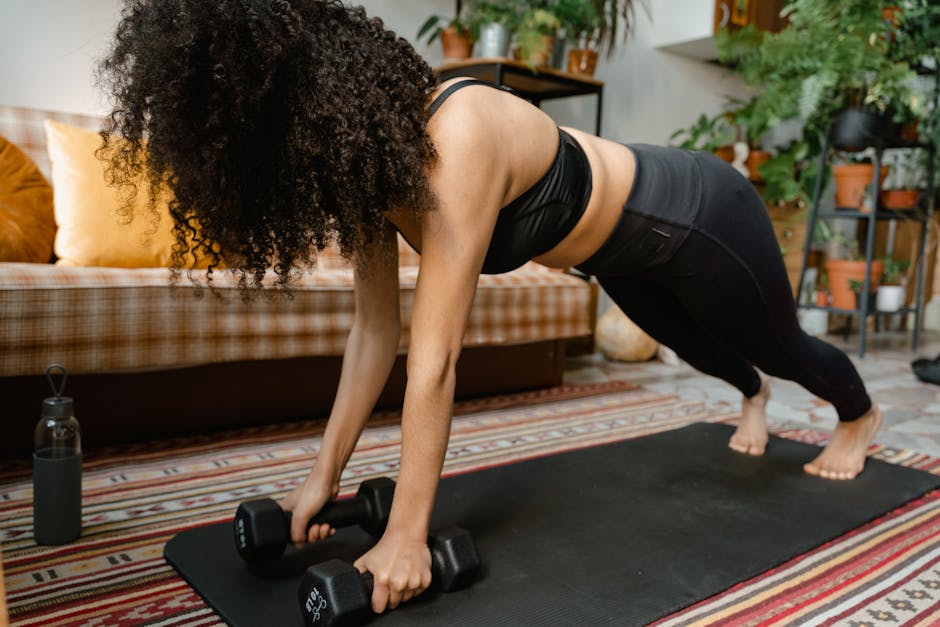
  • Strength Training for Beginners Female at Home: 4 Weeks

    At a glance

    • The plan: Adults need muscle-strengthening activity on at least 2 days each week.
    • What’s new: This home plan gives every movement a substitute and still covers all major muscle groups.
    • This week: Learn the basic movements and repeat them on 2 days.

    Could two short sessions a week at home be enough to start getting stronger? It’s a realistic place to begin. The CDC says adults need muscle-strengthening activity on 2 or more days a week that works the legs, hips, back, abdomen, chest, shoulders, and arms. This guide to strength training for beginners female at home is built around that baseline. You don’t need equipment, and you don’t have to get every rep perfect.

    What is resistance training for beginners? It’s muscle-strengthening work done on purpose, where your muscles push or pull against resistance. That resistance can be your body weight, a wall, or a sturdy chair. What is weight training for beginners? People often use the term loosely for the same kind of work, even when no dumbbells are involved.

    The rule here is repetition over perfection. Come back to the same few movements, notice what feels steady, and change only one thing at a time.

    What this beginner home plan covers

    Woman practicing a wall push-up in a bright home space
    Photo by MART PRODUCTION on Pexels

    This is strength training for beginners with no equipment. You need a chair, a clear section of wall, and some floor space if floor work feels comfortable. Each movement below has a substitute, so every major muscle group the CDC names gets attention during the week.

    • Chair squat: Stand up from a chair. Sit back down slowly. Substitute: Use a higher chair, or hold the chair back for support.
    • Wall push-up: Place your hands on a wall at chest height. Bend your elbows, then press away. Substitute: Stand closer to the wall for a smaller range of motion.
    • Glute bridge: Lie on your back with your knees bent. Lift your hips, then lower them. Substitute: Hold a chair and extend one leg behind you (a standing hip extension).
    • Prone back lift: Lie face down. Gently lift your upper body only as far as feels comfortable. Substitute: Stand tall and gently draw your shoulder blades together.
    • Bird dog: Start on your hands and knees. Reach one arm or the opposite leg away from your body. Substitute: Stand beside a chair, hold it, and reach your free arm forward.
    • Standing arm press: Press your palms together in front of your chest and hold. Substitute: Press your palms into a wall at chest height.

    Pick one version of each movement before you start. Move slowly. Use a stable surface. Stop any movement that causes pain. The substitute isn’t a lesser option. It’s simply the version you can repeat with more confidence today.

    Who should check with a clinician first

    Talk with a clinician before you start or change this routine if you have an injury, a health condition that affects how you move, recent surgery, chest symptoms, dizziness, or any doubt about which activities are right for you. Ask which movements suit you, and whether the chair, wall, floor, or standing versions fit your situation.

    4-Week Plan

    Treat this as a weekly rhythm, not a test you pass or fail. The CDC recommends at least 2 days of muscle-strengthening activity each week, working all major muscle groups. Put your two days on the calendar now. On each day, go through the list at a pace that lets you pay attention to your position and comfort. Here’s how the four weeks build:

    Four weeks of home strength, one small step at a timeFlow diagram: Learn the movement choices → Repeat the same routine on 2 days → Change one variation if it feels familiar → Keep a routine you can repeat. Note: Work all major muscle groups: legs, hips, back, abdomen, chest, shoulders, and arms.Learn the movement choicesRepeat the same routine on 2 daysChange one variation if it feelsfamiliarKeep a routine you can repeatWork all major muscle groups: legs, hips,back, abdomen, chest, shoulders, and arms.
    Diagram: Four weeks of home strength, one small step at a time. Drawn from the official sources linked in this article; it adds no new data.
    Week Focus Home routine Simple progression
    Week 1 Learn the movement choices. Do the chair squat, wall push-up, glute bridge or hip extension, back lift or shoulder-blade squeeze, bird dog or standing reach, and arm press. Pick the easiest stable version of each movement.
    Week 2 Repeat the same routine. Do the same list on 2 days. Notice which setup feels most comfortable. Keep the versions that felt steady in Week 1.
    Week 3 Make one small change if you want to. Repeat the routine. Change only one movement, and only if your earlier version now feels familiar. For example, move from a wall push-up to a kitchen-counter push-up, or use a lower chair if that feels right.
    Week 4 Build a routine you can repeat. Use the versions you want to keep for next month, still covering the major muscle groups on 2 days. Keep it simple enough to do again next week.

    How to start resistance training for beginners without overthinking it

    Woman doing a chair squat during a home strength routine
    Photo by MART PRODUCTION on Pexels

    Set up the room. Put the chair somewhere it won’t slide. Clear a section of wall. If you don’t want to do floor work, choose the standing substitutes before you start so you don’t have to improvise halfway through.

    Make the days obvious. Write “strength” on two days of your weekly calendar, then do the same short list both times. Variety isn’t the point yet. When the movements are familiar, it’s easier to tell whether a chair height, a wall position, or a standing version suits you.

    Don’t treat effort as all or nothing. Researchers have compared resistance-training variables such as load, sets, frequency, and whether to train to muscular failure. That’s useful background, but you don’t need to turn your first month into an experiment. Choose your movements, repeat them, and change one thing only when you have a reason.

    What the research supports, and what it doesn’t show

    What the research supports What it does not show
    CDC guidance calls for muscle-strengthening activity on 2 or more days a week and names the major muscle groups to work. The CDC guidance doesn’t set one required home exercise list, chair height, or floor movement.
    A systematic review and network meta-analysis of randomized trials in healthy adults looked at how combinations of load, sets, and frequency affect strength and muscle size. It doesn’t offer a women-only or home-only beginner routine.
    A systematic review and meta-analysis compared training to repetition failure with stopping short of failure, including subgroups of trained and untrained people. Nothing in its description makes training to failure a requirement for this home plan.
    A systematic review and meta-analysis compared low-load and high-load protocols, with all sets taken to momentary muscular failure. That comparison doesn’t mean a beginner has to use weights or heavy loads at home.

    The takeaway is modest. Regular muscle-strengthening work is part of the recommended activity for adults, and research looks at more than one way to set up resistance training. This plan stays simple on purpose. Its job is to help you build a regular habit before you fine-tune anything.

    Research and guideline links

    The weekly structure comes from the CDC adult physical activity guidance. The Physical Activity Guidelines for Americans is the broader federal resource on making physical activity part of your regular routine.

    FAQ

    What is resistance training for beginners?

    It’s muscle-strengthening activity organized into a few manageable movements and a schedule you can repeat. In this plan, that means body-weight movements with home-friendly substitutes, done on 2 days a week.

    What is weight training for beginners if I have no weights?

    People often use “weight training” as a broad label for resistance work. Strength training for beginners with no equipment can start with chair squats, wall push-ups, standing options, and slow, controlled body-weight movements. The CDC guidance focuses on muscle-strengthening activity and major muscle groups, not on any particular equipment.

    How do I start weight training for beginners after these four weeks?

    Keep the two-day rhythm and keep working the major muscle groups the CDC lists. Repeat the versions that felt stable, or change one movement at a time. A realistic routine you keep doing is worth more than a complicated one you quit.

    Related on Longview Desk


    Not medical advice: This routine is general exercise information, not a personalized program. Start gradually, stop if you feel chest pain, dizziness, or unusual shortness of breath, and check with your doctor or another qualified clinician first if you have a health condition or an injury, or are pregnant.

    This article was written by the site’s author with the assistance of AI tools, and reviewed before publication.

  • Walking for Exercise vs Running: Which Fits Your Week?

    At a glance

    • The plan: Use brisk walking as moderate-intensity activity, or jogging and running as vigorous-intensity activity.
    • What’s new: CDC guidance sets weekly targets of 150 minutes moderate or 75 minutes vigorous activity, or an equivalent combination.
    • This week: Sit less and do an amount of moderate- or vigorous-intensity activity you can repeat.

    Is a brisk daily walk enough exercise, or do you really need to start running? For most adults, this isn’t an either-or choice. In CDC adult physical activity guidance, brisk walking counts as moderate-intensity aerobic activity, and jogging or running counts as vigorous-intensity aerobic activity. Pick the one that fits your week, then repeat it. Repetition over perfection is the point.

    Walking is an easy way into regular aerobic activity. Running can be a time-efficient vigorous option if you want it and it suits your body. You don’t have to choose one for good. A week can include walking, jogging, running, or a mix of moderate and vigorous activity.

    Walking for Exercise vs Running: The Practical Difference

    Person brisk walking on a neighborhood sidewalk
    Photo by Nataliya Vaitkevich on Pexels

    CDC says adults who sit less and do any amount of moderate- or vigorous-intensity physical activity gain some health benefits. Its weekly benchmark is 150 minutes of moderate-intensity aerobic activity, such as brisk walking, or 75 minutes (1 hour and 15 minutes) of vigorous-intensity activity, such as jogging or running. CDC also notes that going beyond those amounts brings even more health benefits.

    So the real difference is intensity. A vigorous minute counts for more than a moderate minute toward the weekly target, which is why the running benchmark is shorter. The walking benchmark is longer but easier for many people to start. Neither option is the “correct” one. The right one is the one you’ll come back to.

    Choose brisk walking when you want a moderate option. Choose jogging or running when vigorous activity suits you. If running isn’t right for today, brisk walk instead. If a brisk walk isn’t comfortable, take a light walk or a standing break while you build the habit.

    A simple intensity choice

    • Brisk walking: Use it as your moderate-intensity aerobic option.
    • Jogging or running: Use it as your vigorous-intensity aerobic option.
    • Combination week: Mix moderate and vigorous activity as an equivalent combination.
    • Reset option: When the planned session isn’t happening, stand up or take a light walk instead of skipping everything.

    Break Up Sitting Between Walks

    The research on walking covers more than workouts. A systematic review and meta-analysis (Buffey et al., 2022, PMID: 35147898) compared breaking up long periods of sitting with frequent short bouts of standing or light walking, and measured the short-term (acute) effects on cardiometabolic health markers in adults. Its starting point is that sitting for long, unbroken stretches is harmful to cardiometabolic health.

    That fits the CDC message that sitting less counts. Use these short steps on days when a full walk won’t happen:

    1. Stand up during phone calls.
    2. Take a short, easy walk after a long stretch of sitting.
    3. Walk to a farther restroom, mailbox, or break room.
    4. Substitute move: if walking isn’t possible, stand for a few minutes instead.

    These breaks don’t replace your weekly target. They’re a backup that keeps the routine going.

    Feedback can help, too. A systematic review and meta-analysis of randomized controlled trials (Heizmann et al., 2023, PMID: 37433730) looked at whether wearable activity monitors with feedback increased daily walking and physical capacity in people with cardiovascular disease. If you already own a step counter, use it to check whether your week matches the plan. Don’t use it to judge yourself.

    What the Research Supports—and What It Does Not Show

    Runner jogging on a tree-lined park path
    Photo by Matthew Edington on Pexels
    What the research supports What it does not show
    CDC classifies brisk walking as moderate-intensity activity and jogging or running as vigorous-intensity activity. It does not say every adult has to run to be physically active.
    CDC says adults gain some health benefits from sitting less and doing any amount of moderate- or vigorous-intensity activity. It does not say a single session defines a successful routine.
    The Buffey review compared breaking up sitting with standing and light walking, using short-term cardiometabolic markers. A review of short-term effects does not show long-term fitness results.
    The Heizmann review studied wearable feedback for daily walking in cardiovascular patients. Because it studied one patient group and one type of intervention, it isn’t a universal answer for every adult or device.
    The Perks network meta-analysis compared structured exercise approaches for walking ability in people with intermittent claudication. It does not show that one walking approach is best for the general population.

    That distinction matters. A study can be relevant to you without being an instruction for everyone. The intermittent claudication analysis (Perks et al., 2022, PMID: 35552376) compared structured high-pain exercise, structured low-pain exercise, and usual care, measuring pain-free and maximal walking ability. That’s a narrow clinical question. It isn’t a reason to push through symptoms on a neighborhood walk.

    Who should check with a clinician first

    Talk with a clinician before starting or stepping up this plan if you have cardiovascular disease, intermittent claudication, or any symptoms that make walking or running hard. Two of the reviews cited here studied cardiovascular patients and people with intermittent claudication. If either applies to you, get advice tailored to you rather than following a generic progression. If a session brings on new or unusual symptoms, stop and get medical advice.

    4-Week Plan

    Week Focus Do this Substitute move
    Week 1 Make movement routine Sit less. Walk an amount you can repeat. Make it brisk when that feels right. Stand, or take a light walk.
    Week 2 Use the moderate option Build brisk walking toward 30 minutes a day, 5 days a week. Walk lightly for part of the time.
    Week 3 Reach the weekly pattern Work toward 150 minutes of moderate-intensity aerobic activity for the week. Use an equivalent combination of moderate and vigorous activity.
    Week 4 Choose your repeatable lane Keep up moderate activity. If vigorous activity suits you, try 75 minutes of jogging or running, or a combination of the two intensities. Brisk walk instead of jogging or running.

    Treat the plan as a set of choices, not a test. Week 1 is about breaking a sedentary pattern. Week 2 introduces the CDC example of 30 minutes a day, 5 days a week. Week 3 puts that example inside the 150-minute weekly target for moderate activity. Week 4 adds the vigorous alternative: 75 minutes a week of jogging or running, or an equivalent combination. If a week goes badly, repeat it. That still counts as progress.

    Four Weeks From Sitting Less to a Weekly Activity TargetFlow diagram: Sit less and add walks you can repeat → Build brisk walking toward 30 minutes a day, 5 days a week → Work toward 150 minutes of moderate-intensity activity → Keep moderate, or try 75 minutes of vigorous jogging or running. Note: An equivalent combination of moderate and vigorous activity also counts.Sit less and add walks you can repeatBuild brisk walking toward 30 minutes aday, 5 days a weekWork toward 150 minutes ofmoderate-intensity activityKeep moderate, or try 75 minutes ofvigorous jogging or runningAn equivalent combination of moderate andvigorous activity also counts.
    Diagram: Four Weeks From Sitting Less to a Weekly Activity Target. Drawn from the official sources linked in this article; it adds no new data.

    How to Start Walking for Exercise

    Start with the smallest realistic version of the plan. Put on comfortable shoes, get up, and walk. If you can walk briskly, that’s your moderate-intensity option. If you can’t yet, a light walk is still a practical substitute for staying seated.

    1. Walk for your first session. Keep it easy.
    2. Repeat it on days that fit your schedule.
    3. Build toward the CDC moderate-intensity example of 30 minutes a day, 5 days a week.
    4. Try jogging only if vigorous activity suits you.
    5. Keep brisk walking as your substitute on days when jogging or running isn’t right.

    You don’t have to graduate to running. If you prefer walking, the 150-minute target gives it a clear place in your week. If you prefer jogging, the 75-minute vigorous target gives that a place too. The comparison that matters isn’t walking against running. It’s a week you can repeat against doing nothing because the plan felt like too much. I’d pick the version you’ll actually do next Tuesday.

    FAQ

    How much walking for exercise is recommended?

    CDC recommends 150 minutes of moderate-intensity aerobic activity every week, and gives brisk walking as an example. One way to get there is 30 minutes a day, 5 days a week.

    Is walking exercise vs jogging mainly about time?

    It’s mainly about intensity. CDC lists brisk walking as moderate intensity and jogging or running as vigorous intensity. That’s why the weekly targets differ: 150 minutes for moderate activity or 75 minutes for vigorous activity, or an equivalent combination.

    What are walking for exercise benefits?

    CDC says adults who sit less and do any amount of moderate- or vigorous-intensity physical activity gain some health benefits. Brisk walking is one of its moderate-intensity examples. Going beyond the weekly target brings even more health benefits.

    What is Asian walking for exercise?

    None of the sources cited here define “Asian walking” as an exercise method. A better starting point is the terms CDC does use: brisk walking for moderate intensity and jogging or running for vigorous intensity. For breaking up long periods of sitting, the research above looked at standing and light walking.

    Sources


    Not medical advice: This routine is general exercise information, not a personalized program. Start gradually, stop if you feel chest pain, dizziness, or unusual shortness of breath, and check with your doctor or another qualified clinician first if you have a health condition or an injury, or are pregnant.

    This article was written by the site’s author with the assistance of AI tools, and reviewed before publication.

  • Strength Training for Beginners Over 50: 4-Week Plan

    At a glance

    • The plan: Adults need muscle-strengthening activity on 2 or more days each week.
    • What’s new: A 2025 systematic review says evidence on the best resistance training prescriptions for sarcopenia is still limited.
    • This week: Work your legs, hips, back, abdomen, chest, shoulders, and arms.

    Could two short strength sessions a week be enough to finally get started after 50? For strength training for beginners over 50, that is a useful baseline. The CDC adult activity guidance calls for muscle-strengthening activity on 2 or more days a week, working all major muscle groups. Think repetition over perfection. Learn a few movements, repeat them, and get comfortable with the routine before you make it complicated.

    So what is resistance training for beginners? It means making your muscles work against resistance. That resistance can come from your own body weight, an elastic band, or a weight. Weight training is one kind of resistance training, using dumbbells, kettlebells, or machines. At home, the best place to start is a short list of movements that covers the major muscle groups named in the CDC guidance.

    What this beginner plan is and is not

    Adult practicing a supported squat in a bright home
    Photo by Kampus Production on Pexels

    This is a four-week practice plan built around the U.S. guideline. It is not a medical treatment. It uses simple home movements and gives every exercise a substitute, so a missing band or an awkward setup doesn’t have to end the session.

    Research supports resistance training in some clinical groups, including older adults diagnosed with sarcopenia (age-related loss of muscle). A systematic review and meta-analysis by Zhao and colleagues (PMID: 36497565) pooled 13 eligible randomized controlled trials. Resistance training improved grip strength, gait speed, and skeletal muscle index in patients with age-related sarcopenia. Kettlebells were the most effective modality, and the authors also recommended elastic bands. That is encouraging evidence. Still, results from a clinical population don’t turn into a prescription for every adult over 50.

    What the research supports and what it does not

    What the research supports What it does not show
    A meta-analysis of 13 eligible randomized controlled trials found resistance training improved grip strength, gait speed, and skeletal muscle index in patients with age-related sarcopenia. It does not show that every beginner over 50 will get the same results or needs the same routine.
    Elastic bands are a recommended form of resistance in that sarcopenia review, alongside kettlebells. It does not show that a band is required, or that any one tool works for everyone.
    When volume load was matched, one review found no differences in muscle growth across the training loads it compared, while heavier loads favored maximal strength. It does not set one best load, exercise list, or home routine for all beginners.
    Evidence on the best resistance training prescriptions for older adults diagnosed with sarcopenia remains limited. It does not provide one proven set of training parameters for everyone with that diagnosis.

    The load comparison comes from a systematic review and meta-analysis by Carvalho and colleagues (PMID: 35015560). It compared very low, low, moderate, and high loads with matched volume load (sets × repetitions × weight). A newer systematic review and meta-analysis by Yan and colleagues (PMID: 41212331) notes that resistance training is widely recommended for sarcopenia, but evidence on the best prescriptions remains limited. The takeaway for a beginner: consistency comes first, and the fine-tuning can come later.

    Who should check with a clinician first

    Talk with a clinician before starting if any of these apply:

    • You have been diagnosed with sarcopenia or are in rehabilitation.
    • You have a heart, lung, joint, or balance condition, or you’ve recently had surgery or an injury.
    • You have unexplained pain, dizziness, or chest discomfort during activity.

    A general home routine is not a substitute for individualized care.

    4-Week Plan

    Schedule muscle-strengthening work on 2 days each week. Keep the same basic movements long enough to learn them. Use a sturdy, uncluttered space at home. Pick the listed substitute whenever the main move doesn’t suit your space, equipment, or comfort.

    Week Focus Do this on 2 days
    Week 1 Learn the movements. Practice the four movements below at an easy, controlled pace.
    Week 2 Repeat the same routine. Cover legs, hips, back, abdomen, chest, shoulders, and arms.
    Week 3 Swap in substitutes as needed. Keep both days and choose movements you can control.
    Week 4 Make the schedule regular. Repeat the routine and keep every major muscle group in it.

    The progression is deliberately plain: learn, repeat, adjust, continue. The Physical Activity Guidelines for Americans focus on making physical activity part of your regular routine. Start with the days you can repeat instead of chasing a perfect session.

    Four-week muscle-strengthening progressionFlow diagram: Week 1: learn the movements → Week 2: repeat for all major muscle groups → Week 3: swap in substitutes as needed → Week 4: make 2 days a week regular. Note: Adults need muscle-strengthening activity on 2 or more days a week.Week 1: learn the movementsWeek 2: repeat for all major musclegroupsWeek 3: swap in substitutes as neededWeek 4: make 2 days a week regularAdults need muscle-strengthening activity on 2or more days a week.
    Diagram: Four-week muscle-strengthening progression. Drawn from the official sources linked in this article; it adds no new data.

    Your simple home movement menu

    Adult doing a resistance band row in a home workout space
    Photo by Mikhail Nilov on Pexels

    Do these movements as a circuit or one at a time. Move with control. If a movement doesn’t feel right, use its substitute or leave it out until you can get individual guidance.

    Legs and hips: sit-to-stand

    Stand in front of a stable chair. Sit down slowly. Stand back up. Keep your feet planted.

    • Substitute: Hold the chair back for support and do a shallow supported squat.

    Chest, shoulders, and arms: wall push-up

    Place your hands on a wall at shoulder height. Step back. Bend your elbows, then press away.

    • Substitute: Use a sturdy countertop for a countertop push-up.

    Back and arms: band row

    Anchor an elastic band securely. Hold the ends. Pull your hands back toward your ribs with control.

    • Substitute: Lie face down and gently lift your arms from the floor, no equipment needed.

    Abdomen and back: bird dog

    Start on hands and knees. Reach one arm forward and the opposite leg back. Return with control. Switch sides.

    • Substitute: Stand tall, lightly brace your abdomen, and slowly lift one knee at a time, holding a counter if needed.

    For strength training for beginners with no equipment, make the substitutes your main routine. Body weight still provides resistance. If you have a band, the band row is an option, not a requirement.

    Make the routine repeatable

    1. Pick 2 days you can protect on your calendar.
    2. Set out a chair, clear a small space, and stay near a wall.
    3. Use the same four movements all week.
    4. Choose a substitute quickly instead of skipping the session.
    5. Show up again on the next scheduled day.

    This approach suits strength training for beginners, female or male, at home because it doesn’t assume a gym, a barbell, or a complicated program. If you’re short on time, a shorter session with all four movements still counts as practice. I like this rule: a done session beats a perfect plan. The goal isn’t to copy a clinical trial. It’s to build a repeatable muscle-strengthening habit that covers the major muscle groups in the CDC guidance.

    FAQ

    What is resistance training for beginners?

    It is muscle-strengthening activity that uses resistance such as body weight, elastic bands, or weights. Start by covering the major muscle groups: legs, hips, back, abdomen, chest, shoulders, and arms.

    What is weight training for beginners?

    Weight training is resistance training that uses weights. It’s one way into muscle-strengthening activity, but not the only one. You can start with body weight or an elastic band at home.

    How do I start resistance training for beginners?

    Start with 2 days a week, pick a short list of movements, and repeat them. Use the four-week plan to learn the routine before changing it. The CDC guidance names 2 or more days of muscle-strengthening activity a week as the target for adults.

    Do I need equipment for strength training after 50?

    No. Use body-weight options such as sit-to-stands, wall push-ups, and the substitutes in this plan. An elastic band adds variety, but the CDC guidance is about working the major muscle groups, not about any particular piece of equipment.

    Related on Longview Desk


    Not medical advice: This routine is general exercise information, not a personalized program. Start gradually, stop if you feel chest pain, dizziness, or unusual shortness of breath, and check with your doctor or another qualified clinician first if you have a health condition or an injury, or are pregnant.

    This article was written by the site’s author with the assistance of AI tools, and reviewed before publication.

  • Strength Training for Beginners and Seniors

    What Is Strength Training for Beginners and Seniors?

    Older adult practicing a chair sit-to-stand exercise at home
    Photo by Kampus Production on Pexels

    Strength training for beginners and seniors means using controlled resistance to work your muscles on a regular schedule. That resistance can come from body weight, a wall, a sturdy chair, stairs, a backpack, or a resistance band. The point is not to make every workout hard. The point is to repeat simple movements with steady form.

    If you have wondered what’s strength training for beginners, start here: learn a few basic movement patterns, pick versions that feel manageable, and come back to them often. A wall push-up counts. Standing up from a chair counts. A supported row with a backpack can count. The best starting version is the one you can control.

    The CDC says adults need muscle-strengthening activity on at least 2 days each week, working all major muscle groups: legs, hips, back, abdomen, chest, shoulders, and arms. This plan uses that as its anchor: two strength days that aren’t back to back, then let repetition do its quiet work. Read the CDC’s adult physical activity guidance for the official overview.

    For older adults, beginners, and anyone coming back after time away, the rule I like best is repetition over perfection. Use a range of motion that feels steady. Move slowly enough to notice your position. Pick the easier substitute when you need it. A small routine you can repeat beats a big first week followed by a long break.

    Who should check with a clinician first

    Check with a clinician before starting a new strength routine if you have been told to limit physical activity, are managing a recent injury or surgery, have a condition that affects balance or movement, or have symptoms that make exercise feel uncertain. Ask which movements, ranges of motion, and support options fit your situation. Stop the session and seek medical guidance if you feel unwell.

    Start With Six Simple Moves

    For strength training for beginners at home, set up near a stable wall, chair, or counter. Wear shoes that do not slide if you are using stairs or standing for balance work. Keep the room clear enough to step backward and sideways without catching a foot on a rug, cord, or pet toy.

    Use these moves as a menu. On each strength day, do either the main version or its substitute. The substitute is not a lesser choice. It is just another way to practice the same pattern.

    Movement Short cue Substitute move
    Chair sit-to-stand Plant your feet, stand tall, then lower with control. Supported mini-squat while holding a counter.
    Countertop push-up Keep your body long and press away from the counter. Wall push-up, which keeps you more upright.
    Supported hip hinge Hold a chair back, send hips back, and keep your spine comfortably long. Glute bridge from the floor or a firm exercise surface.
    Backpack row Support one hand on a chair and pull the backpack toward your side. Standing resistance-band row, if a band is available.
    Low step-up Use a stable step, hold support if needed, and step down slowly. Standing march while holding a counter.
    Bird dog From hands and knees, reach one arm or leg without rushing. Standing opposite-arm reach while holding a counter.

    Start with one controlled round of the moves you picked. End a round when your position starts to slip instead of forcing more reps. Rest when your breathing or form needs a reset. Next session, repeat the same choices before you change several things at once.

    Build a session that feels clear

    1. Pick a time when you are usually alert.
    2. Clear a small space and place your chair or support before you begin.
    3. Choose one lower-body move, one push, one pull, one hip-focused move, and one balance or trunk move.
    4. Move at a pace that lets you control both directions.
    5. Write down which versions felt steady, then use that note next time.

    This is weight training for beginners and seniors, and you don’t need to own weights. If you add a backpack later, start with a load that doesn’t pull you out of position. Keep it close to your body. A smooth movement is a better start than a heavier one that turns into a wobble.

    4-Week Plan

    Beginner performing a wall push-up in a bright home workout space
    Photo by Viridiana Rivera on Pexels
    Week Focus Two strength-day actions
    Week 1 Learn the setup. Schedule 2 days that aren’t back to back. Practice chair sit-to-stands, countertop or wall push-ups, supported hip hinges, and standing reaches. Switch to a substitute right away if balance or comfort calls for it.
    Week 2 Repeat the familiar. Keep the same two days. Add a backpack or band row if it feels controlled. Do a second round only if the first one stayed steady.
    Week 3 Cover more patterns. Keep your main moves and add low step-ups or supported marching. Use the same support each time so you can tell whether the movement feels more familiar.
    Week 4 Make the routine yours. Keep 2 days on the calendar. Pick the five moves you are most likely to repeat next month, plus a substitute for each one.

    Don’t treat the calendar as a test. If Week 2 feels like the right place to stay, stay there. If a chair sit-to-stand feels better than a lower squat, make that your regular version. Consistency is the progression.

    Make the two days easier to keep

    Tie the routine to something you already do: after breakfast, before a shower, or after an afternoon walk. Keep the equipment simple. A chair and a wall are enough to start. If you use a backpack or band, store it where you’ll see it.

    On a low-energy day, use the substitutes and do a shorter session instead of skipping. Supported marching can replace step-ups. Wall push-ups can replace countertop push-ups when the lower angle feels like too much. The plan works best when it can bend without disappearing.

    Women, Men, and Starting at the Right Level

    Strength training for beginners women can look just like a good beginner routine for anyone else: pick movements that match your starting point, use stable support, and progress only when your form holds up. You don’t need a separate list of “women’s” exercises to start with chair work, pushing, pulling, hinging, stepping, and trunk control.

    A systematic review and meta-analysis by Roberts and colleagues compared how young to middle-aged men and women responded to the same resistance-training protocol. It found no significant difference between the sexes in muscle growth, and the upper-body strength results favored women. That is good reason to skip arbitrary sex-based starting rules: begin with the version you can control, then repeat it. See Sex Differences in Resistance Training: A Systematic Review and Meta-Analysis (PMID: 32218059).

    Age doesn’t call for one universal exercise list either. A 2025 systematic review and meta-analysis by Yan and colleagues looked at resistance-training prescriptions for older adults diagnosed with sarcopenia. That is a specific clinical group, so treat it as a reminder to tailor your starting point when health conditions or physical limits are involved. See Optimal resistance training prescriptions to improve muscle strength, physical function, and muscle mass in older adults diagnosed with sarcopenia (PMID: 41212331).

    For a broader U.S. framework on making physical activity a regular habit, see the Physical Activity Guidelines for Americans. It pairs well with a simple at-home routine.

    FAQ

    How do I start strength training for beginners if I have no equipment?

    Start with a chair, a wall, and a stable counter. Do chair sit-to-stands, wall or countertop push-ups, supported hip hinges, standing reaches, and supported marching. Keep two days that aren’t back to back on your calendar. Add a backpack or resistance band only if it makes the routine easier to repeat, not more complicated.

    How often should beginners and seniors do strength training?

    The CDC recommends muscle-strengthening activities on 2 or more days a week for adults, working all major muscle groups. Start with two days that aren’t back to back so you get a clear rhythm: practice, rest, then practice again.

    What if a standard exercise does not feel comfortable?

    Use the substitute. Hold a counter for a mini-squat instead of doing a chair sit-to-stand. March in place instead of stepping up. Do a wall push-up instead of a countertop push-up. The goal is a controlled movement you can come back to, not proving you can do the hardest version.

    Is weight training for beginners and seniors only about lifting dumbbells?

    No. “Weight training” can include dumbbells and other weights, but beginner strength work can also use body weight, a wall, a chair, stairs, a backpack, or a resistance band. Start with moves that cover the major muscle groups, then keep the routine simple enough to fit your two-day schedule.


    Not medical advice: This article is for general education only and is not a substitute for professional medical advice, diagnosis, or treatment. Talk with your doctor or another qualified clinician before changing your exercise, diet, medication, or treatment.

    This article was written by the site’s author with the assistance of AI tools, and reviewed before publication.