At a glance
- What they studied: Researchers studied mice lacking the growth hormone receptor in liver cells.
- What’s new: The mice showed aging-related phenotypes alongside liver mitochondrial damage and lipid accumulation.
- What it means: PDK4 inhibition ameliorated age-related pathologies induced by the receptor loss in mice.
What is cellular aging, and can a change in liver cells affect how aging appears across a mouse’s body? Paper of the Week: “Hepatocyte Growth Hormone Receptor Ablation Is Associated With Aging Phenotypes and Hepatic Mitochondrial Dysfunction,” published in Aging Cell in October 2026. The paper is available through PubMed (PMID: 42791620) and at https://doi.org/10.1111/acel.70741.
In this study, cellular aging refers to aging-related changes observed in cells and tissues, including increased cellular senescence in mice with a specific liver-cell alteration. The researchers also report mitochondrial damage, altered lipid handling, and broader aging-related phenotypes in those mice. The useful distinction is that senescence is a cellular finding here; it is not, by itself, a complete explanation of the animals’ shortened lifespan or other outcomes.
What they did
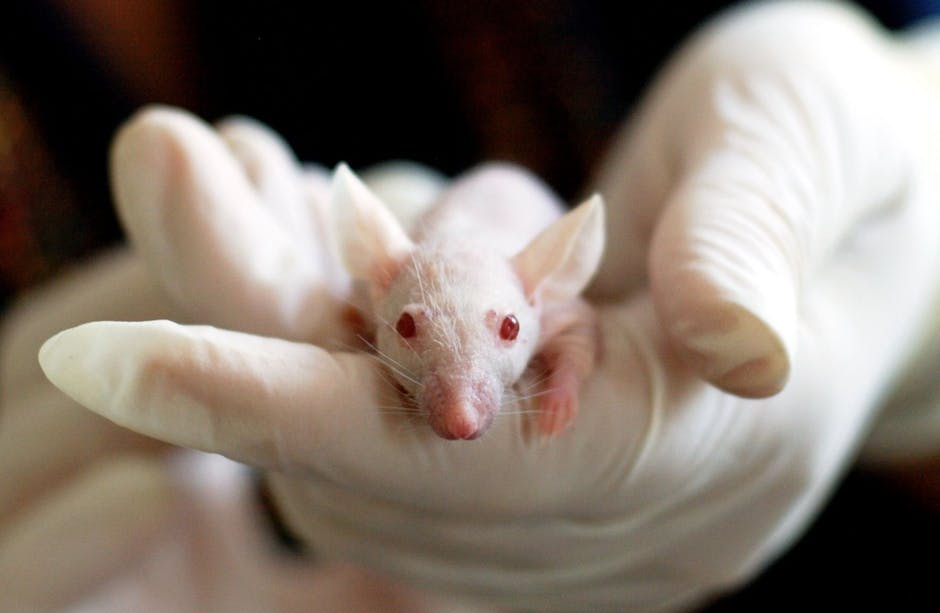
The researchers used mice in which the growth hormone receptor, or GHR, was knocked out specifically in hepatocytes, the liver cells at the center of this experiment. They assessed aging-related phenotypes and liver changes, including findings in naturally aged mice and mice fed a high-fat diet. The reported outcomes encompassed lifespan, cellular senescence, metabolic stress resilience, cognition, bone mineralization, inflammation, and age-related liver pathology.
They also examined a proposed molecular route from liver GHR loss to mitochondrial damage and lipid accumulation. Their account involves reduced phosphorylation of STAT5b, increased expression and nuclear translocation of PPARγ, and activation of transcription of Pdk4 and Cd36. Separately, they report that elevated circulating growth hormone after liver-cell GHR ablation mediates communication between fat tissue and liver, promoting fat breakdown in adipose tissue and CD36-dependent fat accumulation in the liver.
Finally, the researchers tested pharmacological inhibition of PDK4 in the mice. That intervention matters for interpreting the mechanism: the paper reports not only changes associated with loss of liver GHR, but also an improvement in the induced age-related pathologies when PDK4 was inhibited. An intervention in this mouse model strengthens the case that the proposed pathway participates in the observed phenotype, while leaving open how much of the full phenotype each step explains.
What they found
Mice lacking GHR in hepatocytes had shortened lifespans, increased cellular senescence, reduced resilience to metabolic stress, cognitive decline, impaired bone mineralization, and heightened age-related inflammation. The researchers also found more liver aging and worse age-related liver pathology in both naturally aged and high-fat-diet-fed mice with this alteration. These are findings in mice, not measurements of cellular aging or disease progression in humans.
In the mouse liver, the reported molecular changes connect GHR loss with impaired STAT5b phosphorylation and increased PPARγ expression. According to the paper, enhanced nuclear translocation of PPARγ then activates transcription of Pdk4 and Cd36, leading to mitochondrial damage and ectopic lipid accumulation. The authors describe disrupted lipid metabolism and mitochondrial dysfunction as a self-amplifying cycle.
The abstract names each step of that chain without attaching numbers to it. The readouts it reports, all in mice, are these:
| Readout named in the abstract | Reported direction in mice lacking hepatocyte GHR |
|---|---|
| STAT5b phosphorylation | Impaired |
| PPARγ expression and nuclear translocation | Increased; activates transcription of Pdk4 and Cd36 |
| CD36-dependent hepatic steatosis | Promoted, alongside adipose lipolysis |
| Pharmacological inhibition of PDK4 in vivo | Ameliorated the induced age-related pathologies |
Pharmacological inhibition of PDK4 improved the age-related pathologies induced by hepatocyte-specific GHR ablation in vivo. The available abstract does not give a numerical effect size for that improvement or specify which reported outcomes changed by how much. “Ameliorated” is best read as a model-specific experimental result, not as evidence that inhibiting PDK4 slows ordinary aging. This is preclinical research; no therapy based on it is FDA-approved.
For readers comparing cellular senescence and aging, the distinction is worth keeping visible. The study reports enhanced cellular senescence among several findings after a defined genetic change in mice. It also reports mitochondrial damage and changes outside the liver. Those observations support investigating how a liver-cell pathway relates to wider aging phenotypes, but they do not show that senescence alone drove every change. The alternate spelling “cellular senescence and ageing” describes the same question; it does not change what this mouse experiment can establish.
Why be careful

First, this is a mouse study built around a specific genetic alteration: removal of GHR from hepatocytes. It does not establish what happens when liver GHR signaling varies during typical human aging. Nor does it show that the same chain of events operates in a person with mitochondrial disease. Mitochondrial damage is a reported feature of the altered mouse livers; a diagnosis of mitochondrial disease in humans is a different claim that this study did not test.
Second, the supplied abstract does not report the number of mice, numerical effect sizes, or an independent replication. That prevents a reader relying on the abstract from judging the precision of the lifespan finding, the magnitude of the intervention response, or how consistently the results appeared across experiments. Without those details, the direction of a reported effect is easier to state than its practical importance.
Third, the model combines tissue-specific receptor loss with changes in circulating growth hormone and communication between adipose tissue and liver. The proposed pathway therefore includes events both within and beyond hepatocytes. It would be too simple to describe this as a test of mitochondrial function alone: the reported metabolic and hormonal changes are part of the result.
Fourth, the authors themselves use measured language. The title says the ablation “is associated with” aging phenotypes, and the abstract calls hepatic GHR signaling a “candidate node” within a broader network of factors and a “promising therapeutic target” for age-related liver disorders. A promising target in a knockout mouse is a starting hypothesis for further work, not a finding about any existing treatment.
What the evidence separates
| What this study shows | What it does not show |
|---|---|
| Mice lacking hepatocyte GHR displayed increased cellular senescence and shortened lifespan. | That the same alteration explains cellular aging or lifespan in humans. |
| The altered mouse livers showed mitochondrial damage and ectopic lipid accumulation along the reported signaling pathway. | That mitochondrial damage alone caused every aging-related phenotype. |
| PDK4 inhibition ameliorated pathologies induced by hepatocyte GHR loss in mice. | That PDK4 inhibition is an established treatment or slows typical human aging. |
FAQ
What is cellular aging in this study?
It is the collection of aging-related cellular and tissue changes the researchers examined after removing GHR from mouse hepatocytes. Increased cellular senescence was one reported finding; mitochondrial damage and lipid accumulation in the liver were others. “Cellular aging” is a useful starting term, but the paper’s specific measurements matter more than treating it as a single process.
Is cellular senescence the same as aging?
No. This mouse study reports enhanced cellular senescence alongside shortened lifespan and other aging-related phenotypes, but it does not establish that the terms are interchangeable. Keeping them separate helps avoid turning an observed cellular change into a claim about the cause of the whole animal’s decline.
Does this explain mitochondrial disease?
No. The researchers report mitochondrial damage in livers of mice with hepatocyte-specific GHR loss. They did not report testing a human mitochondrial disease or a treatment for one. A shared reference to mitochondria should not be mistaken for evidence that these are the same condition.
Did the inhibitor stop aging in mice?
The paper reports that pharmacological PDK4 inhibition ameliorated age-related pathologies induced by hepatocyte-specific GHR ablation. The supplied abstract does not say that it stopped aging, give a numerical effect size, or establish a benefit outside this experimental setting.
One-line takeaway
This mouse study makes liver GHR signaling a plausible pathway to investigate in cellular aging, but its senescence, mitochondrial, and inhibitor findings do not yet tell us how human aging works or how to treat it.
Related on Longview Desk
Not medical advice: This article explains published research for general education. Results from animal, cell, or early-stage studies may not apply to people, and nothing here recommends a treatment, supplement, or test. Talk with your doctor or another qualified clinician about your own health.
This article was written by the site’s author with the assistance of AI tools, and reviewed before publication.