At a glance
- What they studied: A model trained on 3D images of young and aged mouse blood-forming stem cell nuclei.
- What’s new: The model distinguished the age groups and identified predictive chromatin features.
- What it means: Epigenetic-drug screening in aged mouse stem cells was a proof of concept, not a healthspan measurement.
Can a picture of a mouse stem cell tell us anything useful about healthspan? Paper of the Week: “Deep Learning Predicts Hematopoietic Stem Cell Aging From 3D Chromatin Images,” published in Aging Cell in October 2026. The paper is available on PubMed (PMID: 42802377) and at https://doi.org/10.1111/acel.70656.
Healthspan is the part of life spent in good health, rather than simply the total length of life. The paper’s starting point is that age-related decline in the blood-forming system affects how an organism functions and contributes to reduced healthspan. Its experiment, however, did not measure how long mice remained healthy. It tested whether images of blood-forming stem cells could distinguish younger cells from aged ones.
That distinction matters for a reader asking “What is healthspan?”: a marker associated with cellular aging may help researchers study a process relevant to healthspan, but it is not itself a measure of healthy life. Here, the proposed marker comes from chromatin, the material whose spatial organization is visible in images of cell nuclei. The study asks whether an image-based model can learn age-associated patterns in that organization.
What they did

The researchers built ChromAgeNet, an interpretable deep-learning approach based on convolutional neural networks. They trained it on 3D microscope images of DAPI-stained nuclei from young and aged murine hematopoietic stem cells, or HSCs. These are blood-forming stem cells; the cells used for the age-classification task were from mice, not humans.
The training task was to discriminate between the young and aged mouse HSC images. The researchers also compared ChromAgeNet with classical machine-learning models trained on handcrafted chromatin features from the same dataset. In other words, they tested whether the image-learning approach performed better than an approach using features selected in advance.
They then used explainable artificial intelligence techniques to identify image features predictive of the model’s classifications. Finally, as a proof of concept, they evaluated the model as a phenotypic screening tool for aged HSCs treated with epigenetic drugs. The abstract describes this as a test of whether the model could detect rejuvenation in treated cells; it does not report a mouse healthspan outcome.
The sequence is best read as a measurement experiment: learn an age-associated image pattern, examine which features inform it, and test whether the resulting model is useful in a cell-screening setting. It is not a sequence showing that altered chromatin organization caused a change in healthspan.
What they found
ChromAgeNet distinguished young from aged mouse HSC nuclei with an AUROC of 0.77 ± 0.03. AUROC describes how well a classifier separates the categories it was asked to distinguish across classification thresholds. The authors report that their approach outperformed classical machine-learning models trained on handcrafted chromatin features from the same dataset. The abstract does not give the comparison models’ numerical scores.
The explainability analysis identified chromatin entropy, peripheral heterochromatin, and chromatin condensates as predictive markers. These are features of chromatin organization in the images. The paper presents them as information the model used to predict age-associated chromatin states, not as demonstrated causes of HSC aging.
The epigenetic-drug experiment was a proof of concept for screening treated, aged mouse HSCs with the model. The abstract does not name the drugs, quantify an intervention effect, or establish that treated cells regained youthful function. A younger-looking image classification after treatment would be a lead for further testing, not evidence on its own that the intervention improved the cells’ function or extended healthspan.
Key reported details
| Reported detail | What it describes |
|---|---|
| 3D | The microscope images of DAPI-stained nuclei used to train the model. |
| 0.77 ± 0.03 | ChromAgeNet’s reported AUROC for distinguishing young and aged mouse HSCs. |
| PMID: 42802377 | The selected paper’s PubMed identifier, not a study outcome. |
The most useful result for aging research may be the combination of classification and interpretable features: it offers a way to ask which visible nuclear patterns accompany aging in this mouse-cell dataset. Whether those patterns remain useful in other datasets, or predict outcomes beyond cell age group, requires separate evidence.
Why be careful
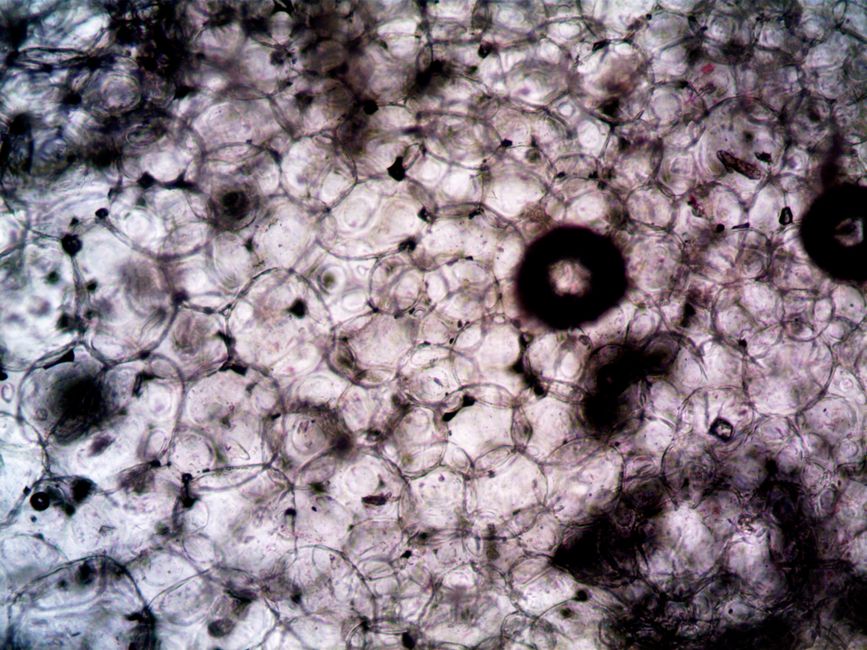
First, this is a model trained and evaluated on images of mouse HSC nuclei. It does not establish an image-based test for healthspan in humans. Mouse stem cell age groups, human aging, and the lived experience captured by the word “healthspan” are different levels of observation. The paper connects them through a research rationale, not through a direct human outcome measurement.
Second, the abstract gives no sample size. Without the number of cells, mice, or independent image collections, a reader cannot assess the study’s scale from the abstract alone. It also does not report independent replication or performance on a separate human dataset. Those gaps should not be filled with assumptions about the underlying experiments.
Third, the reported AUROC is a classification result, not an effect size for a treatment. The abstract reports 0.77 ± 0.03 for the model but provides no numerical effect size for the epigenetic-drug proof of concept. It does not say that a drug improved stem cell function, changed healthspan, or produced a benefit in mice.
What the result does and does not cover
| What this study shows | What it does not show |
|---|---|
| A model distinguished young and aged mouse HSC images with a reported AUROC of 0.77 ± 0.03. | That an image classification measures healthspan or predicts an individual mouse’s future health. |
| Chromatin entropy, peripheral heterochromatin, and chromatin condensates were predictive image features. | That those features cause age-related decline or that changing them improves stem cell function. |
| The researchers evaluated epigenetic-drug-treated aged mouse HSCs as a screening proof of concept. | That a drug improved healthspan in mice or that any treatment exists for humans. |
Finally, a model can learn a distinction without establishing why the distinction exists. Chromatin architecture changes with aging, and the study found image features that helped predict the age groups. The next research question is whether those features track biological function reliably across independent samples, rather than merely distinguishing the images used for this particular task.
This is preclinical research; no therapy based on it is FDA-approved. The paper discusses epigenetic drugs in a mouse-cell screening context, not an approved intervention derived from this model. For longevity research, the responsible use of a classifier like this would be to generate and test hypotheses, while keeping its image-based readout separate from claims about treatment benefit.
One-line takeaway
ChromAgeNet offers a way to study age-associated chromatin patterns in mouse blood-forming stem cells, but its classification result does not tell us whether an intervention improves healthspan.
FAQ
What does healthspan mean in this study?
Healthspan refers to time spent in good health. The paper identifies decline in the blood-forming system during aging as a contributor to reduced healthspan, then investigates a possible marker of stem cell aging. It does not directly measure the duration of healthy life in mice or humans.
Did the model measure the age of an entire mouse?
No. ChromAgeNet was trained to distinguish images of nuclei from young and aged mouse blood-forming stem cells. Its reported AUROC describes that image-classification task. Calling the output a whole-animal aging measure would extend the result beyond the experiment described.
What did the epigenetic-drug test establish?
The researchers evaluated treated aged mouse HSCs as a proof of concept for phenotypic screening. The abstract does not name a drug, provide a treatment effect size, or report improved mouse healthspan. A screening signal could help prioritize follow-up work, but it cannot substitute for evidence that cells function better or that an organism stays healthy longer.
How does this fit into longevity research?
The study explores whether changes in chromatin organization can be modeled as quantitative markers of aging in the blood-forming system. It pairs an image classifier with an analysis of predictive features. Its contribution is a method for investigating stem cell aging in mice; any connection between that method and a meaningful healthspan outcome remains to be tested.
Related on Longview Desk
Not medical advice: This article explains published research for general education. Results from animal, cell, or early-stage studies may not apply to people, and nothing here recommends a treatment, supplement, or test. Talk with your doctor or another qualified clinician about your own health.
This article was written by the site’s author with the assistance of AI tools, and reviewed before publication.