At a glance
- What they studied: Inherited noncoding variation, mitochondrial metabolism, and tumor progression in clear cell renal cell carcinoma, using matched tumor and adjacent normal kidney tissues.
- What’s new: The paper describes a germline-encoded lncRNA-mitochondrial axis that it says rewires oxidative phosphorylation in this cancer.
- What it means: The available abstract excerpt reports the aim and approach but no sample size, effect size, or intervention result.
Is a mitochondrion a cell, or is it part of one? For a search about “mitochondria vs cell,” the useful distinction is scale: mitochondria are components inside cells, not competing names for the whole cell. Paper of the Week: “A Germline-Encoded lncRNA-Mitochondrial Axis Rewires Oxidative Phosphorylation to Drive Progression in Clear Cell Renal Cell Carcinoma,” published in Cancer Research on October 13, 2026. The record is on PubMed (PMID: 42868004) and at https://doi.org/10.1158/0008-5472.can-25-5866.
That distinction matters here because the paper is not asking whether a tumor cell and a mitochondrion do the same job. It asks how inherited variation might relate to mitochondrial metabolism inside clear cell renal cell carcinoma, or ccRCC. The supplied abstract describes ccRCC as having profound metabolic reprogramming and substantial inherited susceptibility, and it names oxidative phosphorylation as the metabolic process at the center of the title. The portion of the abstract available here stops partway through the methods, so the stated aim and approach can be described with more confidence than any effect size or intervention outcome.
What they did

The investigators aimed to delineate the germline regulatory architecture underlying ccRCC susceptibility and to determine how inherited noncoding variation influences mitochondrial metabolism and tumor progression. According to the available excerpt, they performed whole-genome sequencing and transcriptomic profiling of matched ccRCC tumor and adjacent normal kidney tissues, then integrated those data with cross-ancestry genome-wide association and cis-expression quantitative trait analysis. The excerpt cuts off during that methods description.
In practical terms, this is a question that spans several levels of biology: inherited sequence variation, patterns of gene expression, and metabolism in tumor tissue. Keeping those levels separate is especially helpful when reading a headline about mitochondria “driving” cancer progression. Whole-genome sequencing concerns variation in DNA sequence; transcriptomic profiling concerns which RNAs are expressed and at what level. The supplied material does not specify the number of tissue pairs, the ancestries represented, how any functional experiments were performed, or which findings were replicated in an independent set of samples.
The title names a germline-encoded lncRNA-mitochondrial axis and says it rewires oxidative phosphorylation to drive progression in ccRCC. “Germline” points back to the inherited-variation question stated in the abstract; “lncRNA” (long noncoding RNA) is the RNA component named in the title. The proposed chain is more specific than the general statement that cancer cells have altered metabolism, but the excerpt supplied here does not let a reader inspect each link in that chain.
What they found
The finding that can be attributed to the supplied text without filling gaps is the conclusion carried in the paper’s title: a germline-encoded lncRNA-mitochondrial axis rewires oxidative phosphorylation in connection with ccRCC progression. The available abstract excerpt states the research aim and part of the approach, but not the detailed results. It does not provide a named variant, a named lncRNA, numerical changes in oxidative phosphorylation, a progression measure, or a response to any intervention.
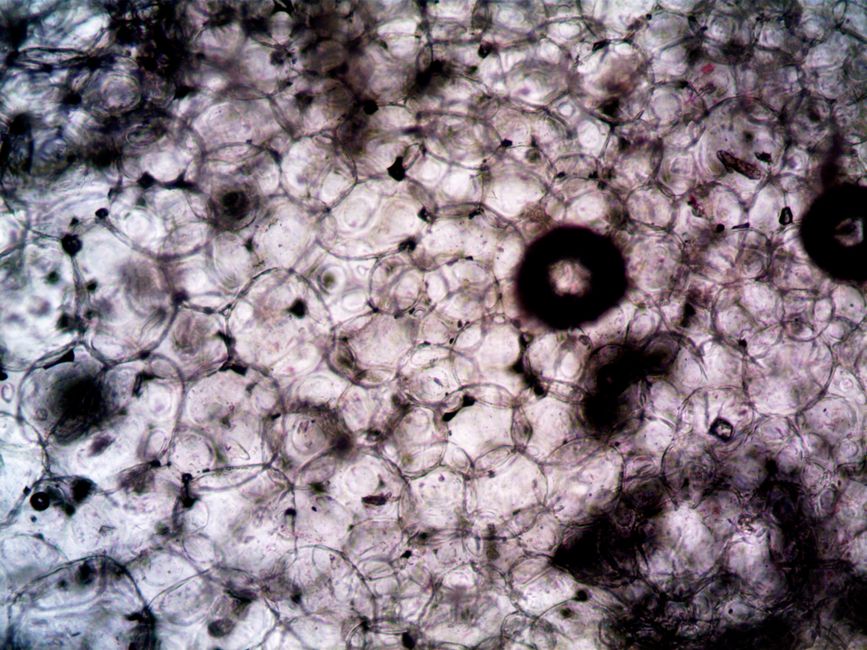
Read the mechanism as the authors’ reported model, not as a fully inspectable sequence of experimental results in this short source pack. The figure below follows the relationship stated in the title and the abstract’s aim, using the human kidney tissues the excerpt describes. The excerpt does not report an intervention result, so none is shown.
For the original “mitochondria vs cell” question, this framing also prevents a category mistake. The paper discusses mitochondrial metabolism in the setting of tumor and adjacent kidney tissues; it does not suggest that mitochondria replace cells or that an isolated mitochondrion is the unit being compared with a tumor. A careful reading moves from a possible inherited regulatory signal, to a metabolic process inside tumor cells, to an association with progression, while keeping the tissue context in view.
The title uses strong causal language, “rewires” and “drive,” but the excerpt alone cannot show which experiment supports that language or how large the observed changes were. For a colleague evaluating the claim, the next question would be whether the complete paper separates a mechanistic effect from an association across genomic and expression datasets. That is a question for the full report, not an additional result established by the excerpt.
Why be careful
First, the sample size is not supplied. Matched tumor and adjacent normal kidney tissues are mentioned, but the excerpt gives no count of participants or tissue pairs. Without that count, a reader cannot judge how much tissue-level evidence sits behind the analysis or how precisely any reported estimate was measured. The available text also gives no effect size for the proposed metabolic change or for tumor progression.
Second, the model is human tissue, not a mouse or cell-line study, as far as the excerpt shows. It names matched human ccRCC tumor and adjacent normal kidney tissues and mentions cross-ancestry genome-wide association, but it describes no treatment study in people. The code-classified study type is unknown. Those details warrant a narrower conclusion than “this explains kidney cancer”: the available text identifies a research question and an asserted axis, but not the reach of the finding across tumors, laboratory models, or clinical settings.
Third, replication cannot be assessed from this excerpt. Cross-ancestry analysis is listed among the integrated approaches, but the excerpt does not say whether an independent dataset reproduced a particular variant-to-expression link or metabolic finding. It also does not describe an intervention result. A mechanism becomes more persuasive when its component links can be checked separately; here, the provided summary is too short to judge it against that standard.
Finally, the abstract says that mechanisms linking germline risk variation to metabolic reprogramming could potentially be exploited for precision interventions. That is a statement of potential, not a report of an available intervention. This is preclinical research; no therapy based on it is FDA-approved. The distinction is important: identifying a possible metabolic vulnerability is not the same as demonstrating a safe, effective treatment.
What this study shows, and what remains open
| What this study shows | What it does not show |
|---|---|
| The reported approach integrates whole-genome sequencing and transcriptomic profiling of matched ccRCC tumor and adjacent normal kidney tissues. | The supplied excerpt does not give the number of tissue pairs or any effect size. |
| The paper’s title proposes a germline-encoded lncRNA-mitochondrial axis involving oxidative phosphorylation and ccRCC progression. | The excerpt does not identify the variant or lncRNA, or provide the detailed results supporting each proposed link. |
| The abstract excerpt lists cross-ancestry genome-wide association among the integrated approaches. | It does not establish, from the supplied text, whether an independent analysis replicated the specific mechanism. |
| The abstract presents precision interventions as a potential future use of understanding the mechanism. | It does not report an intervention outcome, and no FDA-approved therapy is based on this axis. |
FAQ
What is mitochondria and what does it do?
“Mitochondria” is plural; “mitochondrion” is singular. In the mitochondria-versus-cell comparison, think of mitochondria as structures inside cells that take part in energy metabolism, rather than as another name for a cell. This paper focuses specifically on oxidative phosphorylation in the context of ccRCC. It is not a general survey of every mitochondrial function.
Why compare mitochondria with a cell in this study?
The comparison helps locate the claim: inherited variation and RNA regulation are being connected to a mitochondrial process within a cancer setting. The investigators profiled matched tumor and adjacent normal kidney tissues, then integrated those data with genetic analyses. The proposed mitochondrial axis is therefore part of a broader question about tumor biology, not a claim that mitochondria and whole cells are interchangeable.
Does this paper show a treatment for kidney cancer?
No treatment result appears in the supplied excerpt. The abstract raises the possibility of future precision interventions, but it provides no drug result, trial outcome, or clinical recommendation. On the information available here, the paper is best read as an investigation of a proposed mechanism in tissue samples, not as evidence that changing mitochondrial metabolism treats ccRCC.
Is this a mouse or cell study?
The excerpt describes matched human ccRCC tumor and adjacent normal kidney tissues, together with population-genetic analyses. It does not mention a mouse model or a cell line, though the full paper may include functional experiments that the excerpt does not cover. Until those sections are available, the safest reading is that the evidence in the pack is observational and tissue-based.
One-line takeaway
Mitochondria are parts of cells; this ccRCC paper proposes a link between inherited regulation and mitochondrial metabolism in human kidney tissue, but the supplied excerpt cannot establish the mechanism’s effect size, replication, or treatment relevance.
Related on Longview Desk
Not medical advice: This article explains published research for general education. Results from animal, cell, or early-stage studies may not apply to people, and nothing here recommends a treatment, supplement, or test. Talk with your doctor or another qualified clinician about your own health.
This article was written by the site’s author with the assistance of AI tools, and reviewed before publication.